Jersey City has approved a state aid agreement to address a significant financial crisis inherited by Mayor James Solomon. The city faced a $255 million deficit left by the previous administration, requiring a combination of spending cuts, state loan and grant funding, and tax increases on residents. The approved deal will result in an average property tax increase of $612 per year for homeowners as the city works to stabilize its finances.
A judge has dismissed a lawsuit filed by Leonard Filipowski, known as Leroy Truth, against Union City Mayor Brian Stack and the city regarding his arrest at a public commission meeting. The court ruled that police had probable cause to arrest Filipowski after he refused repeated orders to return to the podium during the meeting, finding the arrest lawful.
Union County Clerk Joanne Rajoppi passed away on July 16. The New Jersey Globe compiled statements reflecting on her life and career in public service. Rajoppi held a significant role in Union County government, and her death prompted reflections from colleagues and officials about her contributions to the region.
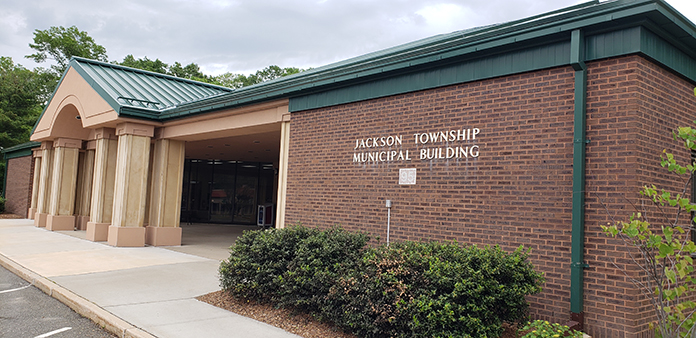
Jackson Township's Town Hall meeting room has reopened after a fire code review prompted concerns over recently installed doors. The controversy, dubbed "Doorgate" by some residents, led to the cancellation of a Township Council meeting on July 14. Following the resolution, a Zoning Board meeting was held as scheduled. Council President Mordechai announced the reopening via the township's Facebook page, indicating that fire code compliance issues have been addressed.
Anna Little, a former Monmouth County freeholder and Tea Party activist appointed by the Trump administration, has established herself as one of the nation's most immigrant-friendly immigration judges. Despite her conservative political background, Little has achieved one of the lowest asylum denial rates among U.S. immigration judges and was later promoted under the Biden administration, reflecting a notable shift in her judicial approach toward immigration cases.
Jersey City Council voted unanimously to approve a $105 million emergency state loan, contingent on implementing a 15% municipal property tax increase for the 2026 levy. The approval came after an eight-hour council meeting, marking a significant fiscal decision tied to state financial assistance.
New Jersey immigration attorneys are raising concerns that immigration courts in the state have shifted their approach under new Trump administration policies, functioning as what they characterize as a deportation machine. The legal professionals report that long-term detainees are being denied bond hearings at higher rates, leaving many immigrants in prolonged detention without the opportunity for release pending their court cases.
Montclair Police Department announced significant personnel changes with eight probationary officers advancing to full status and three veteran officers receiving promotions. The moves strengthen the department's ranks and reflect career progression within the force.
Montclair is moving its municipal funds away from banks that finance companies operating Immigration and Customs Enforcement (ICE) detention facilities. The township council made the decision based on ideological concerns about ICE jail operations. According to Township Manager Stephen D. Marks, the move—while primarily motivated by principle—may also result in better financial terms for the municipality.
New Jersey's Board of Public Utilities has ordered an investigation into how electric companies responded to widespread power outages that occurred around July 4th. The probe will examine utilities' storm preparedness measures and restoration efforts, with particular focus on outages that persisted for multiple days, raising questions about operational readiness and customer service during the weather emergency.
Ocean County is purchasing a motel in Toms River to serve as emergency housing for homeless individuals, marking an expansion of the county's homelessness response beyond its traditional focus on prevention programs like rental and mortgage assistance. The initiative represents a collaborative effort between county officials and a major regional housing nonprofit to provide immediate shelter for people experiencing homelessness.
South Jersey is advancing its military infrastructure with the development of an F-16 pilot training center as part of a broader regional fighter jet initiative. According to Van Drew, this military capability serves as a critical defensive line protecting the densely populated New York-to-Washington corridor. The expansion represents a significant investment in the region's aerospace and defense sector capabilities.
New Jersey is increasing its tax credit for parents struggling with child care costs, which significantly exceed the national average in the state. The enhanced tax break will provide annual credits of up to $1,250 to help offset the financial burden families face. This adjustment comes as inflation continues to impact household expenses, particularly for working parents seeking affordable child care options.
Legal advocates argue that immigration courts are functioning as a 'deportation machine' under Trump administration policies that push for detained immigrants to be denied bond hearings. Immigration court judges are reportedly complying with these directives, making it increasingly difficult for detainees to secure release while their cases proceed. The situation raises concerns about due process and access to justice for immigrants in federal custody.
Gun advocates in New Jersey are using recent Supreme Court rulings, particularly those from a Hawaii case, to argue that the state's restrictions on carrying firearms should be struck down. The Second Amendment groups are leveraging the court's decisions to challenge New Jersey's current gun-carrying laws and regulations.
New Jersey's Governor Sherrill has signed legislation authorizing the state's energy regulators to procure approximately 1,100 megawatts of new nuclear power capacity. This initiative aims to address the state's growing energy demands and represents a significant policy decision regarding the state's energy future and climate goals.