
Government
EPA Proposes Arsenic Cleanup at Vineland Chemical Site
Source: CNBNews · Aug 1, 2026, 12:00 PM
AI-assisted briefing from the publisher’s public headline and excerpt — not original reporting. How we write briefings
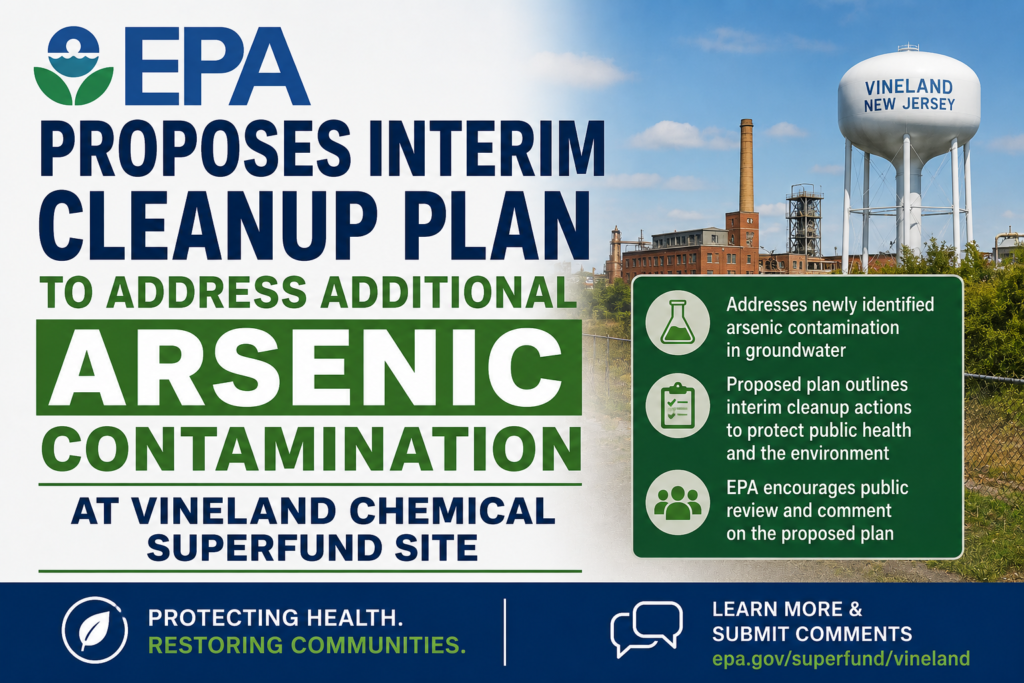
The U.S. Environmental Protection Agency has unveiled a proposed interim cleanup strategy to address ongoing arsenic contamination at the Vineland Chemical Superfund site in Vineland, New Jersey.
The plan specifically targets arsenic-contaminated saturated soil beneath the groundwater table, which continues to contaminate local groundwater supplies.
This represents a significant step in addressing environmental hazards at the long-troubled industrial site. The EPA's proposal aims to reduce health and environmental risks for nearby residents and workers.
The cleanup effort reflects continued federal commitment to remediating one of New Jersey's most serious contamination sites.
Key points
- EPA proposes interim cleanup focused on arsenic-contaminated saturated soil below the groundwater table
- Contaminated soil continues to act as an ongoing source of groundwater pollution at the Vineland site
- The Vineland Chemical Superfund site is one of New Jersey's designated hazardous waste sites requiring federal intervention
- Cleanup plan aims to protect local residents and groundwater from ongoing arsenic exposure
FAQ
- What is the Vineland Chemical Superfund site?
- The Vineland Chemical Superfund site is a designated hazardous waste location in Vineland, New Jersey that requires federal EPA cleanup efforts due to serious environmental contamination, particularly arsenic.
- Why is the EPA proposing this cleanup plan now?
- The EPA is addressing arsenic-contaminated soil beneath the groundwater table that continues to contaminate groundwater. The interim cleanup plan is designed to reduce ongoing contamination risks to the community and local water resources.
- How does contaminated saturated soil differ from surface contamination?
- Saturated soil is located below the groundwater table and poses a greater risk because it remains in direct contact with groundwater, allowing contaminants like arsenic to continue spreading through water supplies that may affect residents and businesses.
Briefing prepared for NJ News Hub. Verify details on the original story. See our editorial policy.
Related
- Popular N.J. Irish pub to shut down after 47 years
Aug 1, 2026
- Live Music in August: Pet Shop’s Tenth Birthday Party, Summerfest, More
Jersey City · Aug 1, 2026
- Morristown Cookie Connect to close: What to know
Aug 1, 2026
- ‘Harry Potter’ star poses with N.J. cops while filming on Jersey Shore
Aug 1, 2026
- Jersey City’s New Event Venues Are Testing the Limits of Building Wi-Fi
Jersey City · Aug 1, 2026